

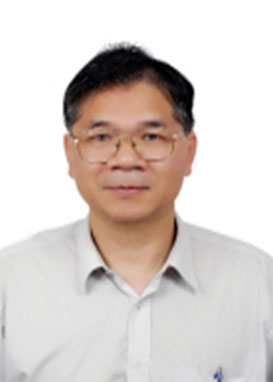
Prof. Ching-Chih Tsai, National Chung Hsing University, Taiwan, China (Fellow of IEEE, IET, CACS, and RST)
Biography: Dr. Ching-Chih Tsai is currently a first-class distinguished Professor at the Department of Electrical Engineering, NCHU, Taichung, Taiwan, where he served as the 2012-2014 department chairman. He received his Ph.D degree in Electrical Engineering from Northwestern University, Evanston, IL, USA, 1991. He has been elevated to Fellow of IEEE, IET, CACS, RST and TFSA.
Dr. Tsai has published more than 700 journal and conference papers, and seven patents in the fields of intelligent control and robotics, where he received many prestigious awards and honors from IEEE and numerous professional societies, and many best conference paper awards technically supported by IEEE. He served as the two-term President of Chinese Automatic Control Society (CACS) from 2012 to2015 and two-term President of Robotics Society of Taiwan (RST) from 2016 to 2019, and the Vice Dean and Dean of the R&D Office, NCHU, from 2019 to 2021. In recent years, he has served associate editors of IEEE Transactions on Systems, Man Cybernetics: Systems, IEEE Transactions on Industrial Informatics, IEEE Transactions on Industrial Cyber-Physical Systems and International Journal of Fuzzy Systems. From 2021 to 2023r, he served as the President of International Fuzzy Systems Association (IFSA), s his two-term BoG member and associate VP for conferences and meetings in IEEE Systems, Man Cybernetics Society (SMCS), and the chair of Distinguished Lecture Program of IEEE SMCS in 2022. Since August 2024, he has served Dean of Electrical Engineering and Computer Science (EECS), NCHU, Taiwan. His current interests include advanced nonlinear control methods, deep model predictive control, fuzzy control, neural-network control, deep learning, broad learning and reinforcement learning, and intelligent learning control methods with their applications to advanced mobile robotics, intelligent service robotics, intelligent mechatronics, intelligent automation, smart machinery, smart agriculture and smart semiconductor manufacturing and packaging.
Speech Title: Adaptive Intelligent Control for Mobile Robots Using Fuzzy Deep, Broad and Reinforcement Learning Techniques
Abstract: Deep learning (DL) and reinforcement learning (RL) have been widely investigated and applied for many engineering applications. Broad learning systems (BLSs) have been shown to work as an effective and efficient incremental learning without the need for deep architecture, thus giving a new paradigm and learning system for AI systems. By incorporating with the merits of DL, RL, variant BLSs and fuzzy logics, this talk will present you fuzzy DL-based, BLS-based and RL-based control frameworks for autonomous mobile robots (AMRs) and multirobots. In the talk, some advances on fuzzy DL NN, fuzzy BLSs and fuzzy reinforcement learning systems are first mentioned, their applications to UAVs, wheeled AMRs and multirobots are discussed in some detail. Experimental results and videos are provided to illustrate the merits of the proposed fuzzy DL-based, BLS-based and RL-based control frameworks. Last but not least, some perspective topics on fuzzy deep, broad and reinforcement learning methods are recommended for future research.
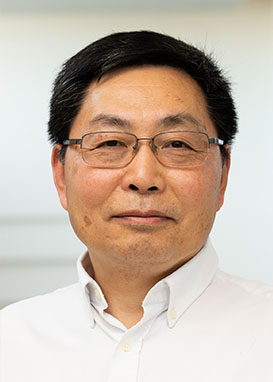
Prof. Zheng Hong (George) Zhu, York University, Canada
(Fellow of CAE, Fellow of EIC, Fellow of CSME, Fellow of ASME, Associate Fellow of AIAA, Senior Member of IEEE)
Biography: Dr. Zheng Hong (George) Zhu is a Professor and and Tier 1 York Research Chair in Space Technology in the Department of Mechanical Engineering at York University in Toronto, Canada. He is the founding Co-Director of Manufacturing Technology Entrepreneurship Centre, founding Director of Space Engineering Lab, and Directors of Smart Autonomous Robotic Technology for Space Exploration at the same university. He has also served as the Inaugural Academic Director of Research Commons in the Vice-President Research & Innovation Office (2019-2022), Chair of the Mechanical Engineering Department (2018-2019), and Director of the Space Engineering undergraduate program in the Department of Earth and Space Science and Engineering (2009-2012) at York University. His research interests include dynamics and control of tethered space systems, space robotics, computational mechanics and control, machine learning, 3D printing in space, and CubeSat. He has authored 210+ peer-reviewed journal papers and 180+ conference articles. Dr. Zhu is an elected member of International Academy of Astronautics, a College Member of the Royal Society of Canada, and the Fellows of the Canadian Academy of Canada, Engineering Institute of Canada, Canadian Society for Mechanical Engineering, and American Society of Mechanical Engineers. He is also an Associate Fellow of the American Institute of Aeronautics and Astronautics, and a Senior Member of IEEE. Dr. Zhu is the recipient of the 2024 Gold Medal and the 2019 Engineering Medal R&D from the Ontario Society of Professional Engineers, the 2024 Solid Mechanics Medal and the 2021 Robert W. Angus Medal from Canadian Society for Mechanical Engineering, and the 2022 President's Research Excellence Award from York University. Finally, Dr. Zhu is fretured in the 2024 Book, Canadians Who Innovate: The Trailblazers and Ideas That Are Changing the World.
Speech Title: From Computational Mechanics to Computational Control
Abstract: Accurate control of spacecraft position and orientation, especially those with flexible structures like tethers, solar panels, and booms, is crucial for mission success. This task typically demands experts with extensive training and specialized knowledge in control systems. One wonders if it is possible to algorithmically synthesize stable feedback laws for controlling the complex coupled rigid-flexible dynamics of spacecraft structures, or more broadly, for dynamic systems with infinite degrees of freedom, analogous to how the finite element method (FEM) solves physical problems in modern engineering. Currently, we find no definitive answer to this in the field of control.This talk will present our recent efforts to bridge this gap by developing a novel model-based computational control framework. This framework algorithmically synthesizes stable feedback laws for dynamic systems with flexible bodies governed by Hamiltonian mechanics and elasticity in a manner analogous to FEM. It is based on the principles of Lyapunov stability theory, Hamiltonian mechanics, and computational solid mechanics. The key achievement is to synthesize feedback control laws in each finite element, rather than piecewise in the discretized regions in the across state space. This involves a piecewise affine local control Lyapunov function within each element and Sontag’s universal formula for local stability. Control inputs are assigned at each element node, with non-actuated elements receiving null inputs. The global feedback system is formed using standard FEM assembly, ensuring stability and controllability through the Popov-Belevitch-Hautus criterion and Lyapunov’s method. Ultimately, our framework integrates with existing FEM programs, simplifying nonlinear feedback control for engineers in rigid-flexible dynamic systems. Once implemented, this framework can be applied to controlling generalized coupled rigid-flexible dynamic systems like using FEA codes.
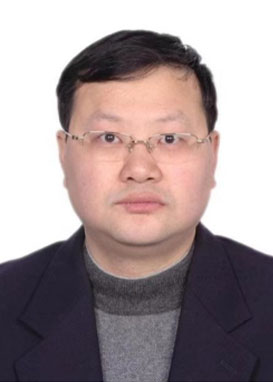
Prof. Li Guo, Hunan University, China
Biography: Prof. Li Guo received his PhD at Xian Jiaotong University, China in 1992. He researched advanced machine tool with Prof. W.B.Rowe at Liverpool John Moores University, UK in 2003-2004, researched advanced materials grinding in airplane engine with Prof. Xun Chen at University of Nottingham UK in 2007 and researched advanced materials join in car body with Prof. S Jack Hu at University of Michigan, USA in 2014. Currently, he is a Doctoral/Master Supervisor at Hunan University, National Science and Technology Evaluation Expert, Academic Backbone of Hunan University, Science and Technology Experts from 15 provinces including the Ministry of Education and Hunan Province, Evaluation Expert for Science and Technology Talent Awards of China Association for Science and Technology, National Graduate Education Quality Monitoring Expert, Vice Chairman of Changsha Mechanical Engineering Society, Manager of Hunan Yuelu Mountain Industrial Innovation Center, etc. He has published more than 80 papers on Journals.
Speech Title: Intelligent monitoring of acoustic emission during grinding of difficult to machine materials
Abstract: To be updated
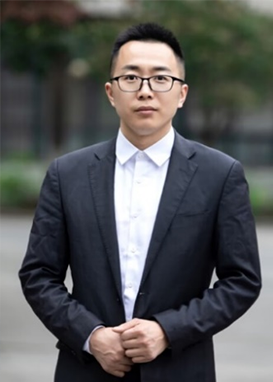
Prof. Shunli Wang, Academic leader of the National Electrical Safety and Quality Testing Center, Smart Energy Storage Institute, China
Biography: Prof. Shunli Wang is a Doctoral Supervisor, Academic Dean, Academic Leader of the National Electrical Safety and Quality Testing Center, Academician of the Russian Academy of Natural Sciences, Provincial Senior Overseas Talent, Provincial level scientific and technological talents, Academic and Technical Leader of China Science and Technology City, and top 2% of top scientists in the world, who is an authoritative expert in renewable energy research. His research interests include modeling, state estimation, and safety management for energy storage systems. 56 projects have been undertaken, including the projects from the National Natural Science Foundation of China and the Provincial Science and Technology Department. 258 research papers have been published (Research Interest Score: 11547; Citations: 3167; h-index: 29). 53 intellectual property rights have been applied, of which 23 authorizations have been approved. 9 books have been published by famous publishers such as Elsevier and IET. 23 honorary titles or awards have been achieved, such as young scholars and leading experts of innovative talent teams. Also, the team has been continuously supported by the "University & Enterprise Innovative Talent Team Support Plan" and unanimously praised by employers and peer experts.
Speech Title: Core State Parameter Monitoring of High-reliability Smart Energy Storage Systems
Abstract: As an important component of the smart grid energy storage system, high-precision state of health estimation of lithium-ion batteries is crucial for ensuring the power quality and supply capacity of the smart grid. To achieve this goal, an improved integrated algorithm based on multiple layer kernel extreme learning machine and genetic particle swarm optimization algorithm is proposed to estimate the SOH of Lithium-ion batteries. Kernel function parameters are used to simulate the update of particle position and speed, and genetic algorithm is introduced to select, cross and mutate particles. The improved particle swarm optimization is used to optimize the extreme value to improve prediction accuracy and model stability. The cycle data of different specifications of LIB units are processed to construct the traditional high-dimensional health feature dataset and the low-dimensional fusion feature dataset, and each version of ML-ELM network is trained and tested separately. The numerical analysis of the prediction results shows that the root mean square error of the comprehensive algorithm for SOH estimation is controlled within 0.66%. The results of the multi-indicator comparison show that the proposed algorithm can track the true value stably and accurately with satisfactory high accuracy and strong robustness, providing guarantees for the efficient and stable operation of the smart grid.
Copyright © The 3rd International Conference on Mechatronics and Automation Technology (ICMAT 2024)

 Wuhan, China